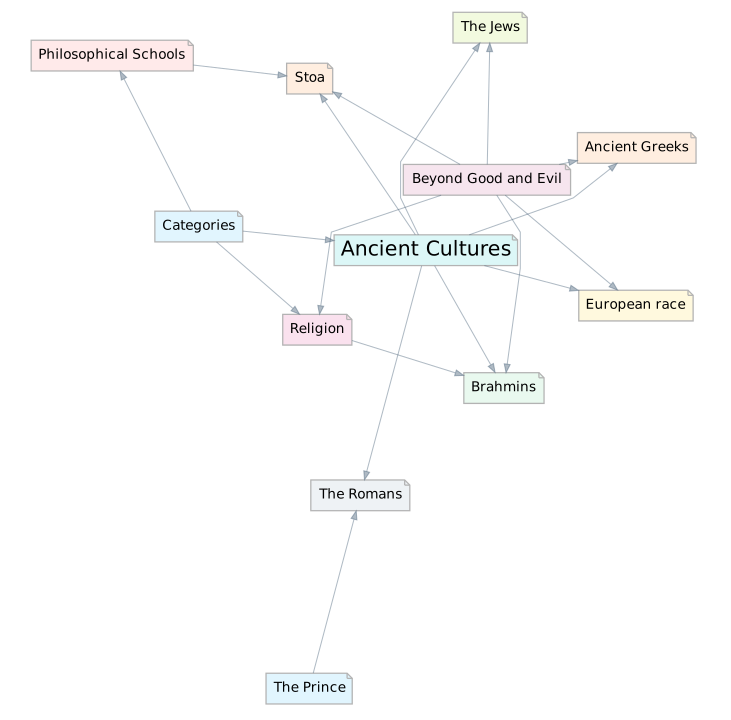
Ancient Cultures#
Summary#
The ancient cultures examined in these texts serve as exemplars of distinct approaches to power, virtue, and governance. Machiavelli presents the Romans as masters of prudent statecraft who methodically maintained dominion through colonial settlements, calculated alliances, and the decisive destruction of rebellious cities like Carthage and Numantia. Nietzsche treats the Greeks as representatives of a noble religious attitude marked by gratitude toward existence, while he credits the Jews with performing a revolutionary inversion of aristocratic values that gave birth to slave morality. The Stoics and Brahmins appear as philosophical-priestly castes who developed sophisticated techniques for spiritual discipline and political influence, each representing a different strategy for managing the relationship between power and restraint.
Ancient Greeks ↖ Beyond Good and Evil
The Jews ↖ Beyond Good and Evil
Brahmins ↖ Beyond Good and Evil ↖ Religion