Epistemology#
Summary#
The epistemological concerns across these texts reveal a tension between the pursuit of truth and the recognition of its limits or dangers. Marcus Aurelius holds truth as a virtue produced by the soul’s highest faculty, something to be perceived through inner illumination when the mind maintains its proper form. Nietzsche radically challenges this classical confidence, questioning whether truth is inherently more valuable than illusion and arguing that all knowledge is necessarily perspectival and involves a form of cruelty toward oneself. He suggests that the “will to truth” may itself originate from the will to deception, and that the strength of a mind might be measured by how much truth it can endure rather than by how much certainty it possesses.
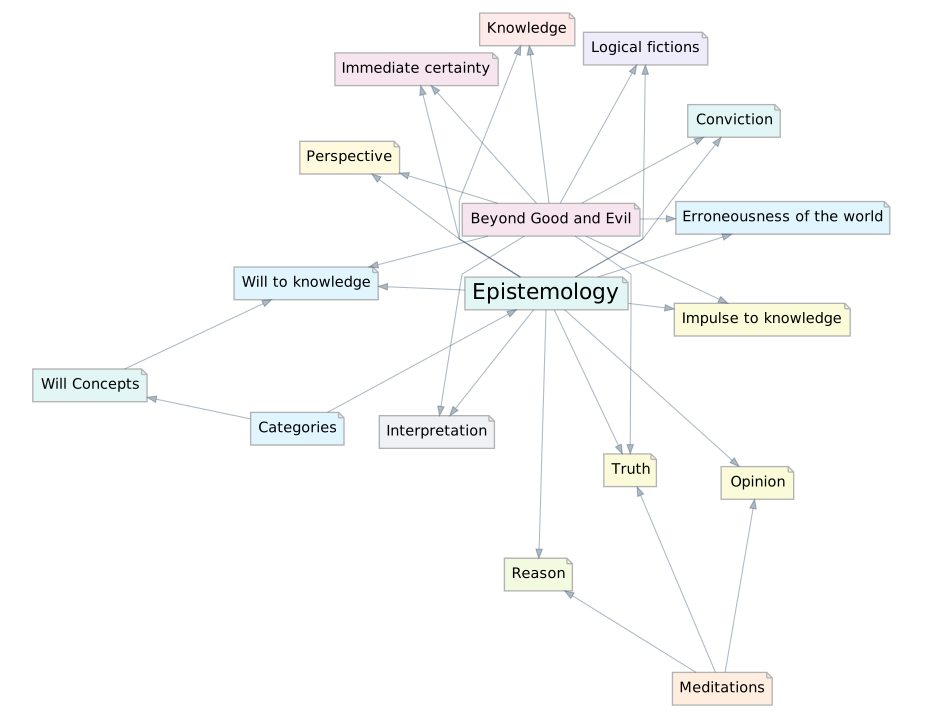
Knowledge ↖ Beyond Good and Evil
Truth ↖ Beyond Good and Evil ↖ Meditations
Perspective ↖ Beyond Good and Evil
Interpretation ↖ Beyond Good and Evil
Conviction ↖ Beyond Good and Evil
Impulse to knowledge ↖ Beyond Good and Evil
Will to knowledge ↖ Beyond Good and Evil ↖ Will Concepts
Immediate certainty ↖ Beyond Good and Evil