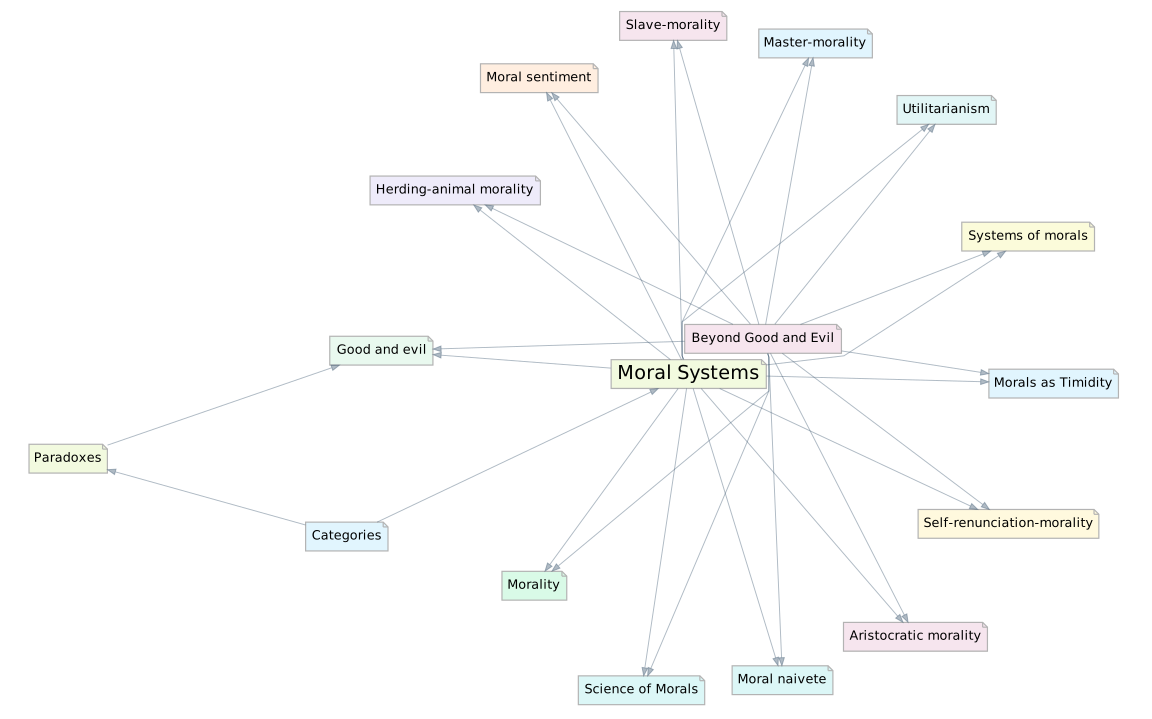
Moral Systems#
Summary#
Moral systems are revealed not as objective truths but as expressions of underlying drives and social positions. Nietzsche distinguishes master-morality, which originates among rulers who determine “good” based on proud and exalted dispositions, from slave-morality, which emerges among the oppressed and suspicious and redefines “good” as whatever alleviates suffering. The master creates values from an overflow of power, while the slave moralizes from fear and resentment. Nietzsche argues that conventional morality operates as a form of timidity that discredits powerful natures in favor of mediocrity, and calls for thinking “beyond good and evil” to recognize that life itself operates independently of moral categories.
Morality ↖ Beyond Good and Evil
Master-morality ↖ Beyond Good and Evil
Slave-morality ↖ Beyond Good and Evil
Aristocratic morality ↖ Beyond Good and Evil
Herding-animal morality ↖ Beyond Good and Evil
Self-renunciation-morality ↖ Beyond Good and Evil
Morals as Timidity ↖ Beyond Good and Evil
Science of Morals ↖ Beyond Good and Evil
Systems of morals ↖ Beyond Good and Evil
Good and evil ↖ Beyond Good and Evil ↖ Paradoxes
Utilitarianism ↖ Beyond Good and Evil