Paradoxes#
Summary#
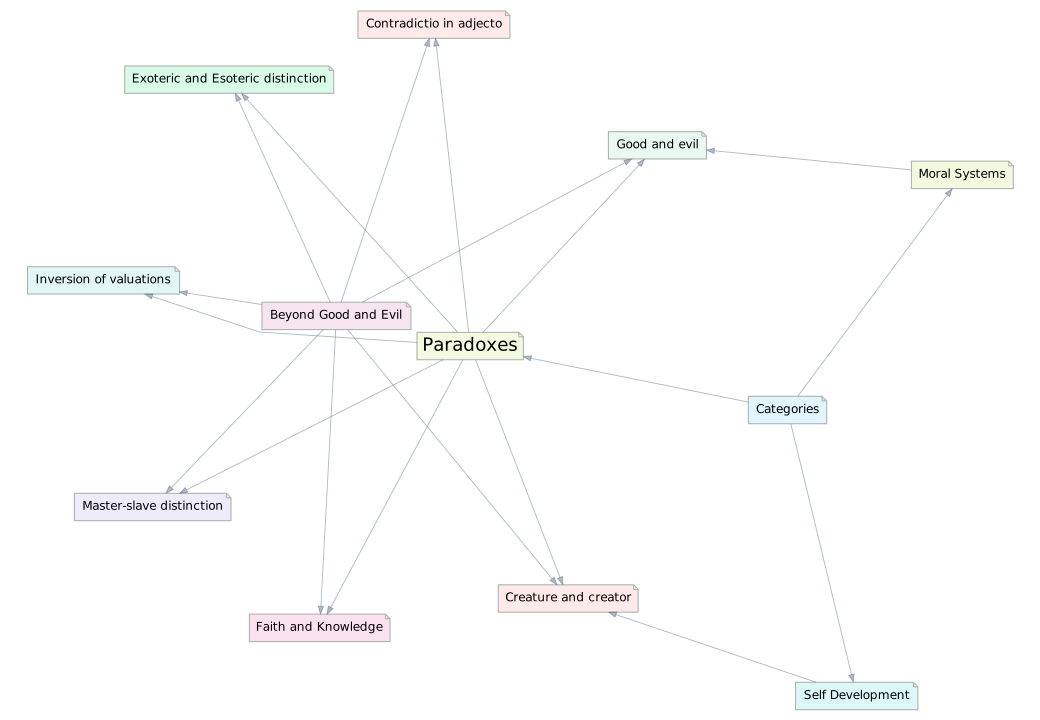
Nietzsche’s philosophy in Beyond Good and Evil proceeds through the exposure and deployment of paradoxes. He identifies “contradictio in adjecto” in foundational concepts like “immediate certainty” and “thing in itself,” while affirming that untruth may be a condition of life. The master-slave distinction reveals how conventional morality inverted ancient valuations, making “poor” synonymous with “saint.” The creature and creator paradox shows humanity as both clay to be fashioned and the sculptor who shapes it. The exoteric-esoteric distinction reveals that the same knowledge serves as nourishment for higher souls but poison for lower ones, while faith and knowledge represent the ongoing contest between instinct and reason.
Contradictio in adjecto ↖ Beyond Good and Evil
Creature and creator ↖ Beyond Good and Evil ↖ Self Development
Good and evil ↖ Beyond Good and Evil ↖ Moral Systems
Master-slave distinction ↖ Beyond Good and Evil
Exoteric and Esoteric distinction ↖ Beyond Good and Evil