People#
Summary#
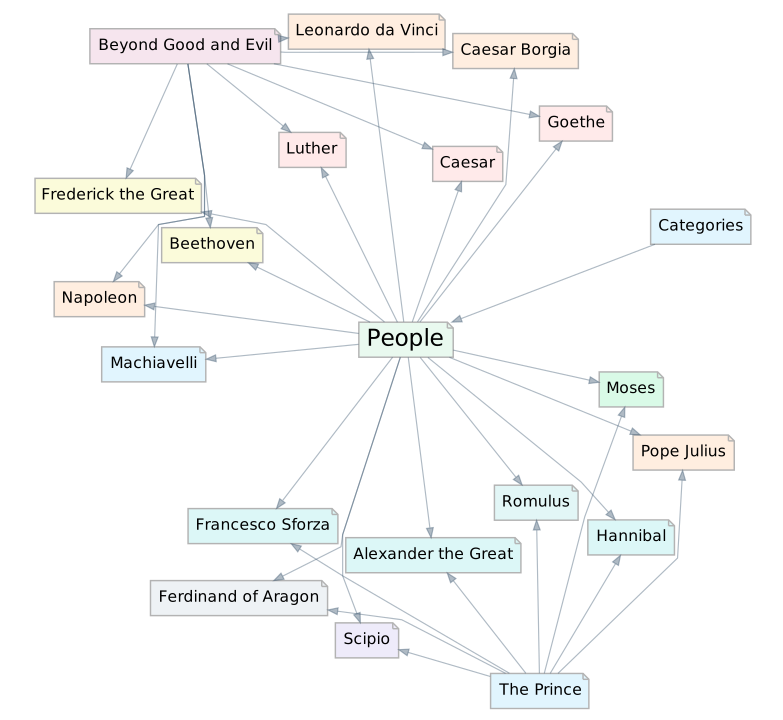
The three texts invoke historical figures as exemplars of human excellence and political effectiveness. Machiavelli draws primarily from Roman and contemporary Italian history: Alexander the Great demonstrates how centralized kingdoms fall swiftly to conquerors, Francesco Sforza exemplifies self-made power through martial ability, Hannibal proves the strategic value of calculated cruelty, while Scipio’s excessive clemency led to military rebellion. Nietzsche invokes different figures to illustrate psychological types: Caesar and Leonardo da Vinci as enigmatical men who transform inner conflict into creative power, Napoleon as the absolute ruler who brought higher happiness to a Europe weary of herd morality, and Goethe as the rare German who embodied genuine masculine strength.
Napoleon ↖ Beyond Good and Evil
Machiavelli ↖ Beyond Good and Evil
Alexander the Great ↖ The Prince
Caesar Borgia ↖ Beyond Good and Evil
Frederick the Great ↖ Beyond Good and Evil
Leonardo da Vinci ↖ Beyond Good and Evil