Power Dynamics#
Summary#
Power and its distribution form a central preoccupation across these works. Machiavelli treats power pragmatically as the prince’s essential concern, advising that it is better to be feared than loved and that maintaining power requires actions the conventionally virtuous would condemn. Nietzsche elevates power to a metaphysical principle, arguing that life itself is Will to Power and that exploitation and appropriation are fundamental organic functions rather than ethical failings. The noble type experiences power as inner plenitude and overflow, creating values from abundance, while those Nietzsche calls the herd view power with suspicion and brand its possessors as evil. Rank and hierarchy emerge not from external markers but from the soul’s fundamental certainty in its own distinction.
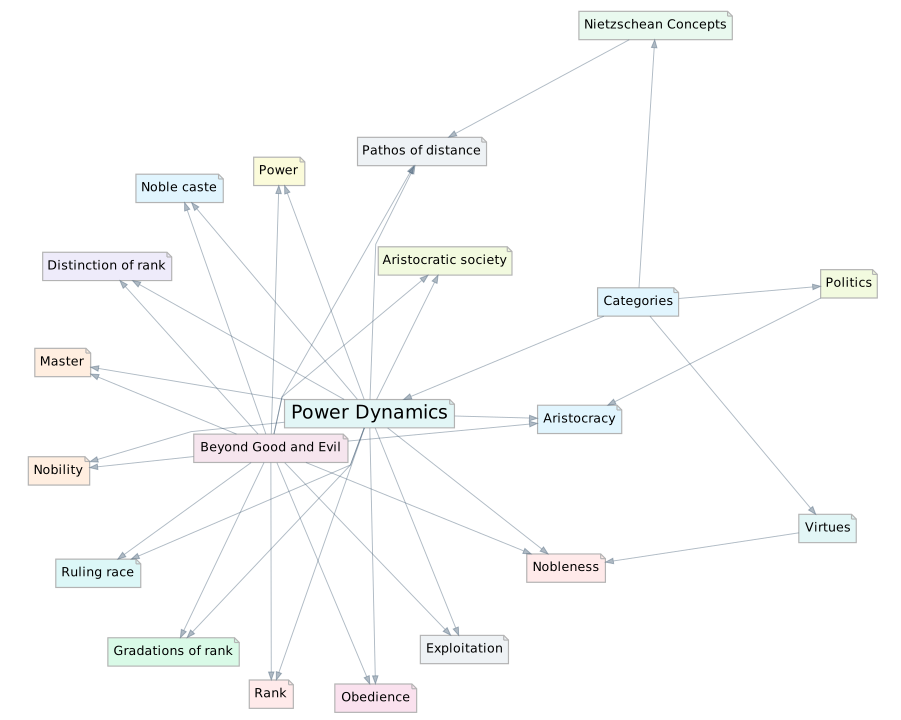
Ruling race ↖ Beyond Good and Evil
Exploitation ↖ Beyond Good and Evil
Pathos of distance ↖ Beyond Good and Evil ↖ Nietzschean Concepts
Distinction of rank ↖ Beyond Good and Evil
Gradations of rank ↖ Beyond Good and Evil
Aristocracy ↖ Beyond Good and Evil ↖ Politics
Aristocratic society ↖ Beyond Good and Evil
Noble caste ↖ Beyond Good and Evil
Nobility ↖ Beyond Good and Evil