Religion#
Summary#
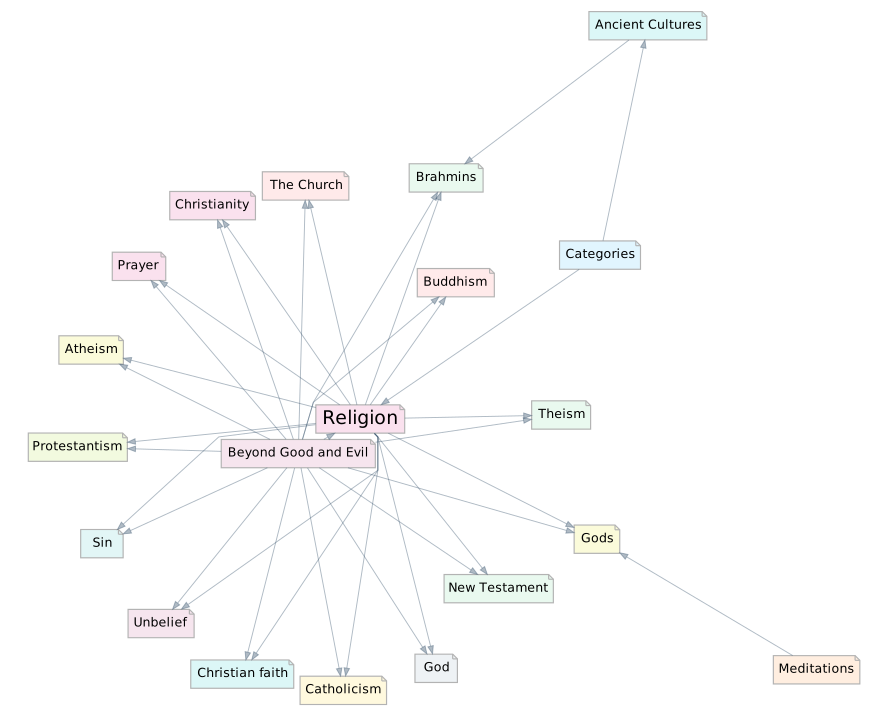
Religion serves vastly different purposes across these works. Marcus Aurelius presents the gods as benevolent powers with whom humans can cooperate through proper prayer, arguing for inner transformation rather than petitioning for external outcomes. Nietzsche views religion as a tool that philosophers may employ for disciplining different ranks of humanity: for rulers it strengthens authority, for noble spirits it provides contemplative refuge, and for the masses it offers consolation that makes their suffering bearable. Christianity and Buddhism are characterized as religions for sufferers that have systematically preserved the weak while working to shatter the strong, inverting ancient values and producing a diminished European humanity.
Gods ↖ Beyond Good and Evil ↖ Meditations
Christianity ↖ Beyond Good and Evil
Christian faith ↖ Beyond Good and Evil
Catholicism ↖ Beyond Good and Evil
Protestantism ↖ Beyond Good and Evil
Buddhism ↖ Beyond Good and Evil
Brahmins ↖ Ancient Cultures ↖ Beyond Good and Evil
The Church ↖ Beyond Good and Evil
New Testament ↖ Beyond Good and Evil
Atheism ↖ Beyond Good and Evil
Unbelief ↖ Beyond Good and Evil