Virtue#
Summary#
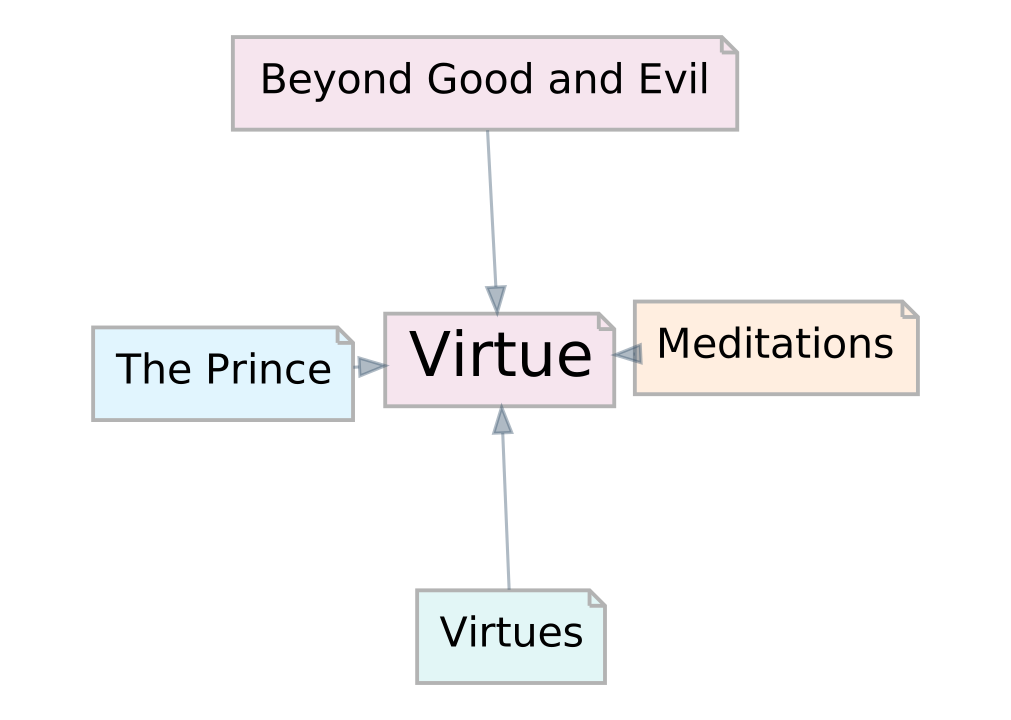
Virtue carries vastly different meanings across these works. For Marcus Aurelius, virtue is acting according to nature and reason, serving the common good as naturally as the eye sees, requiring no external reward. Machiavelli inverts this, arguing that a prince who acts entirely virtuously will be ruined among so much evil; what appears virtuous may destroy while apparent vice may preserve. Nietzsche warns against becoming enslaved to one’s own virtues, noting that every virtue inclines toward stupidity and that moral philosophy has made virtue tedious through its ponderous advocates.
Mentioned In#
The Prince#
- XV. Concerning Things for Which Men, and Especially Princes, Are Praised or Blamed ↖ The Prince
- XVI. Concerning Liberality and Meanness ↖ The Prince
- XXVI. An Exhortation to Liberate Italy from the Barbarians ↖ The Prince
Meditations#
- IX.43 ↖ Book IX
- X.1 ↖ Book X
- X.2 ↖ Book X
- X.14 ↖ Book X
- X.16 ↖ Book X
- X.33 ↖ Book X
- XI.17 ↖ Book XI
- XI.43 ↖ Book XI
- XI.47 ↖ Book XI