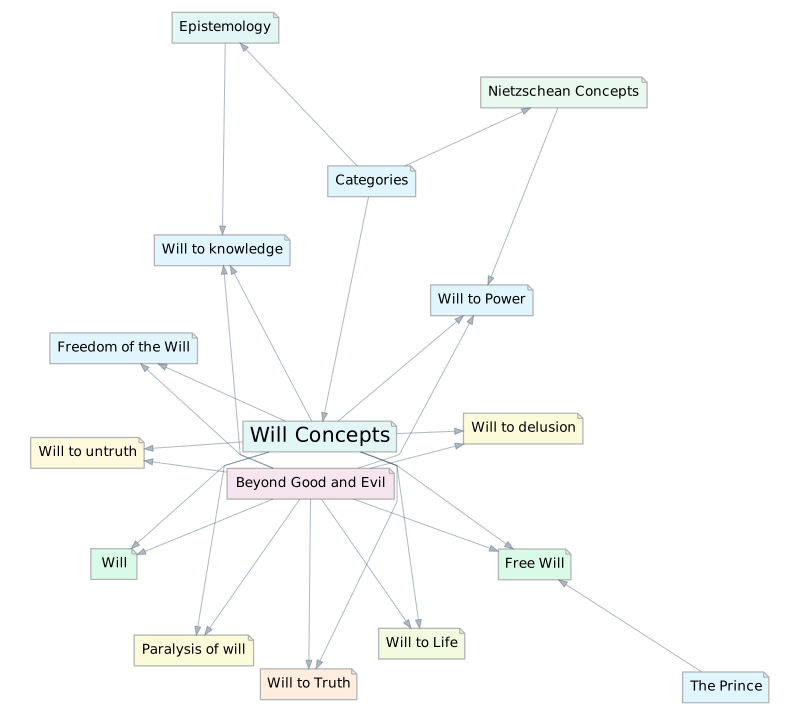
Will Concepts#
Summary#
The concept of will spans these texts with varying interpretations of human agency and its relationship to power and freedom. Machiavelli grants free will dominion over roughly half of human affairs, suggesting that through preparation and adaptability we can resist Fortune’s worst effects. Nietzsche offers a more complex analysis, arguing that will is not the simple unified faculty philosophers presumed but rather a social structure of commanding and obeying within the self. He identifies the Will to Power as the fundamental drive underlying all life, superseding even self-preservation, while critiquing the Will to Truth as potentially nihilistic in its preference for certainty over beautiful possibilities. When will becomes diseased or paralyzed, as Nietzsche diagnoses in modern European skepticism, individuals lose their capacity for independent decision and courageous action.
Will to Power ↖ Beyond Good and Evil ↖ Nietzschean Concepts
Will to Truth ↖ Beyond Good and Evil
Will to Life ↖ Beyond Good and Evil
Will to knowledge ↖ Beyond Good and Evil ↖ Epistemology
Will to delusion ↖ Beyond Good and Evil
Will to untruth ↖ Beyond Good and Evil
Free Will ↖ Beyond Good and Evil ↖ The Prince